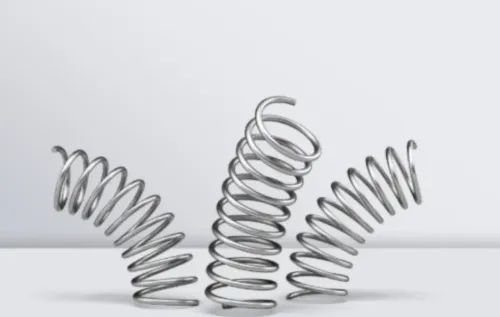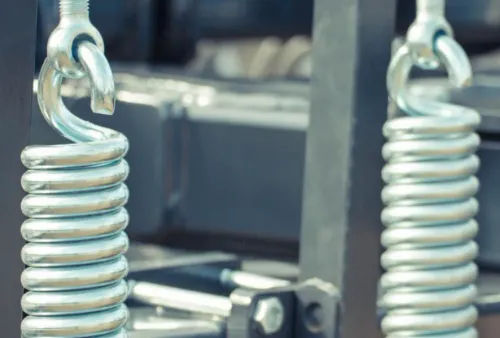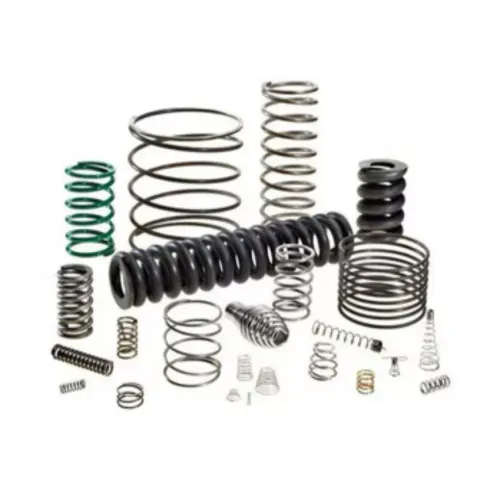


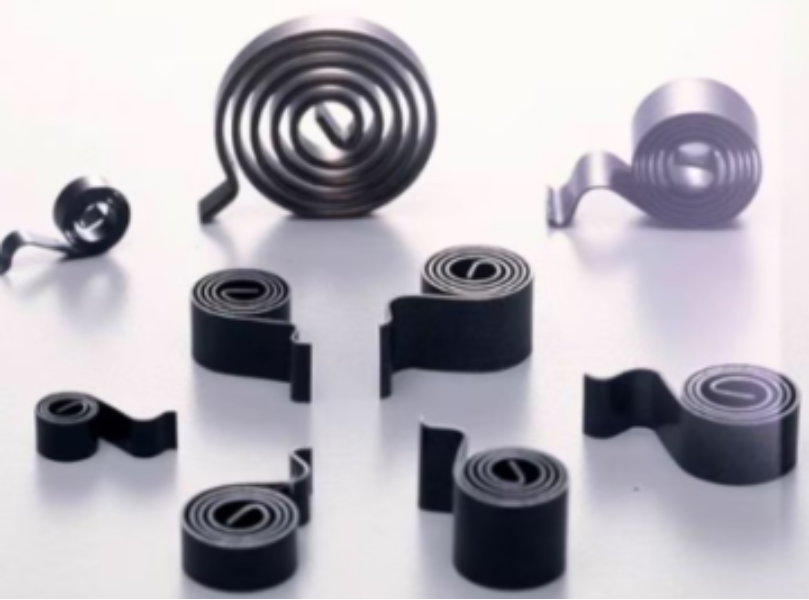
A Torsion Spring is designed to manage rotational force. Instead of primarily working through straight compression, this spring stores mechanical energy when its legs rotate around the spring body. Once the applied force is released, the spring attempts to return to its original position.
This simple mechanical principle makes torsion springs useful in machinery, automotive components, industrial assemblies, tools, fixtures, covers, levers, hinges, clamps, plus many other mechanisms.
For manufacturers in Rajkot, Gujarat, understanding torsion spring behaviour can help improve component selection, machine reliability, service life, plus assembly performance.
How a Torsion Spring Works
A torsion spring typically consists of a tightly wound coil with legs extending from one side, both sides, depending on the required configuration. Force applied to these legs causes the coil to twist.
Several design variables influence its performance
- Wire diameter
- Coil diameter
- Number of active coils
- Leg length
- Leg position
- Material grade
- Required angular movement
- Operating load
- Working environment
A small change in any of these parameters can influence torque characteristics significantly.
For this reason, selecting a spring only by looking at its physical dimensions may lead to poor performance.
Common Industrial Applications
Torsion springs appear in mechanisms where controlled rotational movement is required.
Typical applications include
- Industrial hinges
- Machine covers
- Lever mechanisms
- Clamping devices
- Automotive assemblies
- Tooling systems
- Latches
- Return mechanisms
- Agricultural equipment
- Fabrication machinery
In a machine cover, for example, the spring can assist controlled opening while helping the mechanism return toward its intended position.
Within a lever assembly, it can provide repeatable restoring torque after each operating cycle.
Why Spring Direction Matters
Coil direction is an important detail in torsion spring design.
Depending on the application, a spring may have a left-hand winding, right-hand winding, potentially a configuration designed around a specific movement pattern. Installing a spring with an unsuitable winding direction can affect loading behaviour.
Engineers should therefore identify the direction of applied rotation before finalising spring specifications.
Material Selection Influences Service Life
Spring material needs to suit operating conditions.
Factors worth reviewing include
- Frequency of movement
- Required torque
- Working temperature
- Exposure to moisture
- Corrosive surroundings
- Expected cycle life
- Space available within the assembly
Industrial applications involving repeated movement place different demands on a spring compared with mechanisms that operate only occasionally.
Material selection becomes especially important when the component works inside production machinery where premature spring failure may create avoidable downtime.
Avoid Excessive Deflection
Every torsion spring has a practical working range.
Applying movement beyond the intended angular deflection can create excessive stress. Repeated overloading may result in permanent deformation, torque loss, fatigue, potentially early failure.
Designers should define the expected operating angle before selecting the spring.
The objective is not simply to choose a spring that fits inside the available space. It must also provide suitable torque throughout its expected movement.
Why Manufacturing Accuracy Matters
Dimensional consistency becomes important when springs are used in production assemblies.
Variation in coil diameter, leg geometry, material properties, heat treatment, plus finishing can influence how individual springs behave.
For OEMs producing multiple units, predictable spring characteristics make assembly control easier.
Industrial businesses across Rajkot often work with machine tools, automotive parts, engineering products, dies, fabrication equipment, plus precision components. Reliable spring specifications can therefore support broader manufacturing consistency.
Practical Selection Checklist
Before specifying a torsion spring, engineers should confirm
- Required torque
- Operating angle
- Direction of rotation
- Available installation space
- Coil dimensions
- Leg configuration
- Material requirements
- Expected operating cycles
- Environmental exposure
- Mounting arrangement
Providing these details gives a spring manufacturer a much clearer basis for recommending suitable dimensions.
R B Spring Industries serves industrial requirements in Rajkot with spring solutions intended for engineering applications. For manufacturers, the best torsion spring is not simply the strongest component available. It is the spring whose torque, dimensions, material, movement range, plus installation geometry match the mechanism it is expected to support.